When I was 9 years old, I got my first computer, a Commodore VIC-20. It was nothing by today’s standards, with 3 kilobytes of memory and a 1 megahertz CPU, and even then it cost $299 in 1982, which is about $850 today. It was a surprise gift from a friend of my father, a friend that I had never met. At the time, I had become fascinated with computers, at first drawn in by the video games they could play, but then becoming more and more interested in writing programs to make games of my own. Owning a computer at the time, however, was far-fetched. Both Apple’s and IBM’s machines at the time cost thousands of dollars, and would be prohibitively expensive as machines to teach a nine-year-old about computers. However, Commodore Business Machines changed the practicality of owning a computer in the 1980s by drastically reducing the cost of the hardware while still keeping it competitive with, and in some areas superior to, the computers from other home computer makers like Apple. The man behind Commodore was Jack Tramiel, a Polish Jew who survived Auschwitz and settled in Canada after World War II. Tramiel had a very simple philosophy of doing business : “business is war.” He started Commodore in Canada as a typewriter manufacturer, but had problems with Canada’s equivalent of the SEC over “trading irregularities”, so he moved his business to the US. Cheap to the point of parody, Commodore’s suppliers were often very skeptical that they would ever receive payment, and in one case, a vendor skittish about being paid insisted on collecting in advance with a cashier’s check. Tramiel obliged them, only to call the bank to stop payment on the cashier’s check as soon as they left his office. He was just as ruthless with employees as he was with other companies, and was notorious for firing individuals or laying off entire divisions on a whim. One shrewd business decision he made was to acquire MOS Technology, a maker of semiconductors that had invented a process for radically reducing the cost and improving the quality of chips in the 1970s by correcting flaws in chip designs without needing to retool the semiconductor plant where the chip was being manufactured. This “mask fixing” allowed for a ten-fold reduction in costs in chip manufacturing compared to other approaches in the late 1970s. This allowed Commodore to enter the personal computer market while charging dramatically lower prices for computers with the same amount of memory and processing power as Commodore’s competitors. Tramiel was one of the few people in the computer industry to get the better of Bill Gates, licensing Microsoft BASIC once and using it across several generations of computers, much to Microsoft’s fury. This indirectly benefited me, because having to use the older Microsoft BASIC meant that I had to understand the computer’s hardware in a much more intimate way to use it to its full potential, whereas newer versions of BASIC hid this complexity from the user. Despite the almost comical ruthlessness and miserliness, Jack Tramiel said that he made computers for “the masses, not the classes”, and this almost certainly created opportunities for millions. One of these who learned about technology because of a Commodore VIC-20 was a ten year old boy in South Africa, by the name of Elon Musk.
Now, to billionaires in space. Many have complained that the money used for Richard Branson’s suborbital junket would have been better spent helping disadvantaged people on Earth. Jeff Bezos’ trip to space atop a what certainly resembled a giant penis seemed even more ridiculous. It is true, though, that they have brought the cost of taking humans to suborbital space down dramatically. Elon Musk has gone farther still, bringing the cost of reaching low Earth orbit down to one-third what it was in 2009 by using completely reusable rockets and just days ago, building the tallest rocket in human history. Jack Tramiel was a ruthless businessman and probably not a pleasant person to be around, but he had a vision for how he would benefit society and ultimately succeeded. Jeff Bezos and Elon Musk, at least, sound like they may be similarly difficult people. We can all hope that they will end up changing the world for the better, perhaps despite themselves.
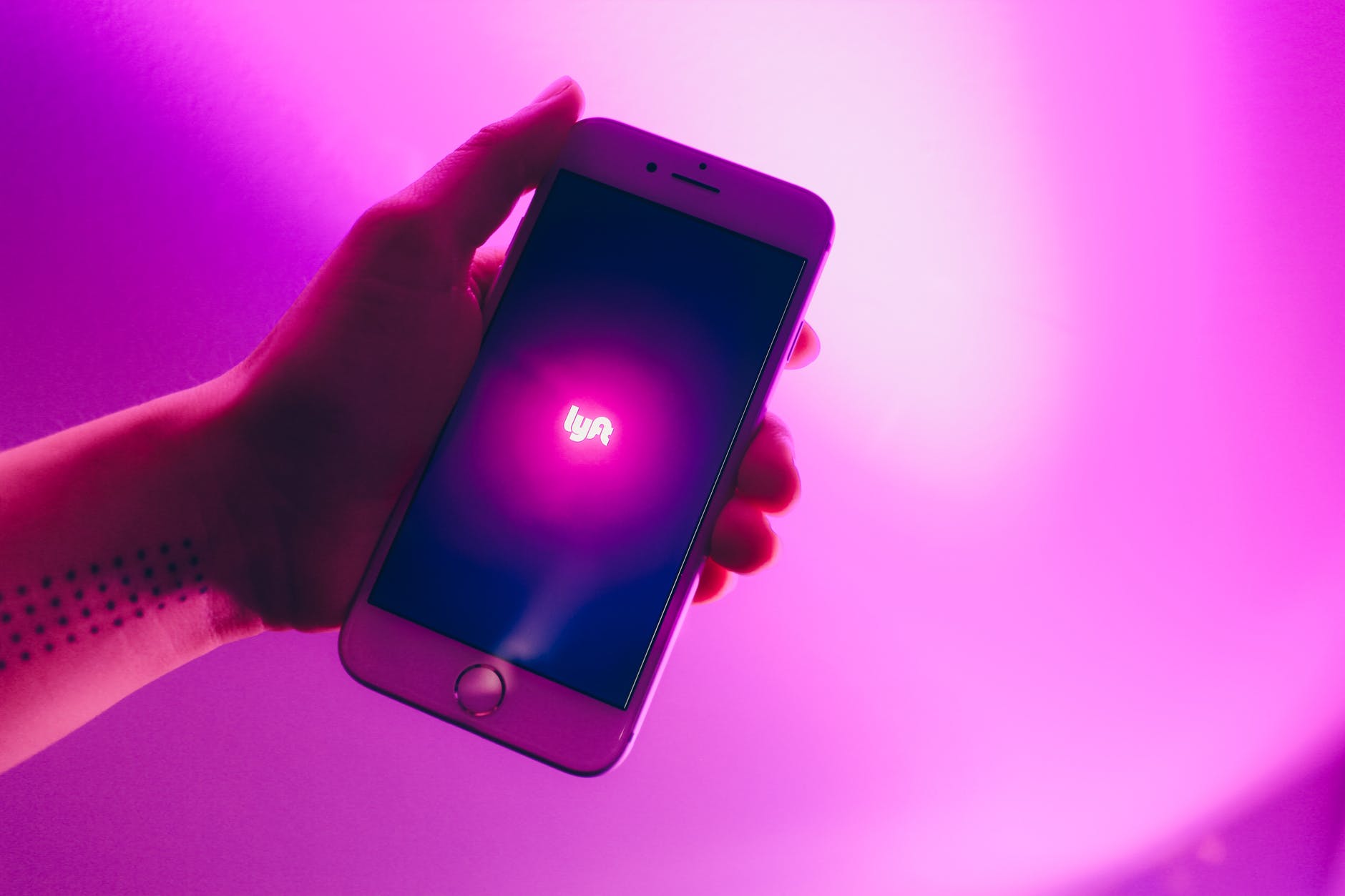
The Lyft app, formally a lifeline, now a disappointment. Photo by Thought Catalog on Pexels.com
Recently, Ryan O’Connell, the star and creator of the Netflix series Special, described to the Guardian how he felt that he had been born into an “ableist hellhole”. I’ve been following O’Connell in the news recently as he, like me, has a mild case of what can be a severe disability (Cerebral Palsy in his case, legal blindness in mine) and we both happen to be gay. For the most part, I have agreed with much of what he’s said to the press, but in this case, I thought he was being a bit harsh. At least for me personally, before the pandemic, I could go for weeks without really being reminded that I am visually impaired. Virtually all consumer electronics and computer operating systems, even including recent Xboxes and the Apple Watch, have some sort of magnification built in and are almost always usable out-of-the-box for me. At work. Its much the same. Since I have a stable and mild visual impairment, all I usually need is a large monitor with magnification, and have had exactly one accessibility problem at work in the last decade. Previously, the largest problem for me caused by my vision was getting around. However, Lyft, Uber, Instacart, and other gig economy services have been a godsend in that area of my life. Pre-pandemic, I essentially had roughly the same life as my fully sighted colleagues, or it certainly seemed that way to me. Errands that would have previously taken half a day using mass-transit could be done using Lyft in under an hour.
Recently, this has changed as the world shifts back to normal and the pandemic recedes. Services like Lyft and Uber that I relied on to achieve an almost complete level of independence are suddenly very unreliable. For example, I had a doctor’s appointment with a specialist which was hard to obtain and took weeks to get. As I would have done pre-pandemic, I summoned a Lyft to my apartment to take me to the doctor an hour before the appointment was scheduled. To my amazement, I was informed by the Lyft app that they would simply be unable to provide a ride after waiting fifteen minutes for them to pair me with a driver. I have scheduled literally thousands of rides with rideshare services, and this was the first time I have not found a ride at all. Since it was too late to get mass-transit to this appointment, and since canceling the appointment would mean I would not be seeing the specialist I needed to see for more than a month, I decided to run the 1.5 miles to the office. This is a route I have never traveled before on foot, so I was unaware that there was a four lane highway I would have to cross without a traffic light. When I reached this highway, there was so much traffic traveling down all of the lanes that I was only able make it across the first two lanes. I then waited in the median, in the middle of the road, as cars whizzed by me in both directions. The thought crossed my mind that there was a chance I had survived a deadly global pandemic only to possibly be killed by an overzealous application of Keynesian economics. An opening in the last two lanes finally appeared after several minutes, and I dashed across to safety, and made it to the appointment with a minute to spare. Although I did make it safely this time, the danger was real. I have not needed to make such a dangerous crossing in more than a decade.
While this was certainly the worst experience I have had with ride share services post-pandemic, its certainly not the only time recently that I’ve been disappointed by these services. Whereas before the pandemic, a ride was less than a ten minute wait, now it can easily be a half-hour or more. If this continues, it will definitely have negative consequences for me and people like me. It will be harder for people who are low vision to get around than its been in almost a decade, and probably more, as the taxis that the rideshare services have replaced no longer exist.
As problems have mounted with gig economy services, however, a narrative has emerged in the media : the users of these services are spoiled millennials heading to their champagne brunches with overpriced avocado toast as they exploit the poverty and misery of others. For example, Kevin Roose wrote in the New York Times on June 8, 2021, that Lyft and services like it offered a “lifestyle subsidy” for “bourgeois royalty” and now reality must return. The contempt for the users of these services resonated from his article. Meanwhile, Ezra Klein, again in the New York Times on June 13th, juxtaposed the cost of Lyft and Uber rides on one side with the alleviation of poverty on the other. Its true that these services have to some degree been subsidized by venture capital, and that this can’t continue forever. Also, its true that some ride share drivers have been treated disgracefully. I was surprised recently to learn that most users do not tip their drivers at all, and I find this appalling. I am not proposing that we create a Dickensian Hell for gig economy workers. However, I also know that there are users of these services for whom they are not a luxury and that the present situation is greatly limiting the possibilities for some of the most vulnerable people in our society, and potentially risking their lives. Mass-transit is almost never a real replacement in many of these cases. Again, I do want the concerns of drivers and investors to be considered, I only ask that the concerns of the disabled users of these services are also taken into consideration. If this isn’t done, we could all find ourselves living in a world that’s much closer to an ableist hellhole than it was before the pandemic.
Our cat, who is very glad not to be participating in any enactments of Schrödinger’s thought experiment.
In 1935, physicist Erwin Schrödinger proposed a thought experiment to highlight the strangeness of quantum physics. He imagined a box, inside of which was a cat. Also in the box was a radioactive atom, which was being monitored by a Geiger counter. The Geiger counter was connected to a hammer which would crush a vial of cyanide, sealing the cat’s doom, if the radioactive atom decayed. All of these things would be sealed inside the box. According to the most popular interpretation of quantum physics, until someone re-opened the box and observed the state of the experiment, the cat would be in the surreal state of being dead and alive at the same time. This is because no information about the radioactive atom’s state could be ascertained without opening the box or at least observing the atom in some way. Radioactive decay is a quantum mechanical phenomenon, and the cat’s fate was bound up with the atom’s quantum state. From outside the box, the cat could only be thought of as both dead and alive until the box was opened and the quantum state of the atom in the experiment was forced to collapse into either having decayed or not: if it had, the cat was a goner, and if not, it would be safe. In my life, I have known this odd, surreal state of seeming to be somewhere between two mutually exclusive worlds, which is where the title of this blog comes from.
I happen to be legally blind. However, my vision is right on the edge between legal blindness in the US and simply being visually impaired. I started school as a member of the first generation of kids to attend mainstream public schools with disabilities. Previously, visually impaired children went to special schools for the blind. Because of this, I was in a kind of no-man’s land. I wasn’t a part of the blind world, but wasn’t accepted in the sighted world, either. Sports were a disaster for me at school, as I could crush any disabled kids in all-disabled sporting events, but would in turn be crushed by the able-bodied kids. Needless to say, neither crushing nor being crushed was much fun. As dealing with disabled students in a mainstream public school was new at the time, teachers sometimes treated me as if I not only couldn’t see, but couldn’t learn, and even mocked me in front of their classes. For example, one teacher said that I was a living example of original sin because of my vision impairment in front of her class at a private Christian school. The large print books I needed at the time could arrive months after the school year started, which didn’t help things for me academically. To confuse the teachers even further, in the second grade I was given an IQ test, probably to catch any possible learning disabilities. To everyone’s surprise, it found that my IQ was in the top 1% of the population. I also began to discover that art was among the things I enjoyed, despite my vision. So there I was, as a child, neither sighted nor blind: a disabled, gifted child with visual hobbies, full of contradictions.
Several major changes were on the way for me as my teen years approached. One of these was that when I was in the 8th grade, contact lens technology finally reached the point where I could use contact lenses instead of the two-inch thick and painfully heavy glasses that were the bane of my existence throughout elementary school, and the relentless teasing about the glasses stopped. Several years earlier, I received a computer as a gift from a friend of my father’s and learned to program after becoming fascinated with video games during the first gaming golden age, lured in by Pac-man and other games from that era. Puberty brought another major surprise. As the years went by, I began to notice that my classmates were veraciously devouring pictures of nude women from purloined Playboys, but these left me cold. Seeing some of my male classmates shirtless, on the other hand, was another thing entirely. Realizing I was gay was problematic, as I was growing up in the South in a fairly religious home, with my father being a minister. Because of my sexuality and my legal blindness, I spent the rest of high school trying to blend in to the background and be as inconspicuous as a ghost. This kept me out of the way of any bullies, but made my high school years incredibly lonely and forgettable.
College, however, was a very different experience. I began to be recognized for my intelligence and abilities as a programmer, and also managed to become something of a big man on campus. I was always a member of the student senate, and strived to be elected to the vice presidency of campus organizations such as the Residence Hall Association, since being vice president didn’t require much work but often did come with a stipend. I also finally developed a small but loyal network of friends, and due to my position on campus even experienced something like fame. I would say that my college experience was as close to perfect as life has been for me, but I was still too scared in the mid 1990s to search for a boyfriend or even an occasional date. If I had known how to navigate the world as a gay man, this period of my life would have been essentially perfect. However, I was still living in the gray-zone, a no-man’s-land between two worlds.
After I graduated college, I moved to Seattle to work for Microsoft, which was then the most important technology company in the world. I discovered two important things about myself at Microsoft. First, I was not the smartest person in the world, not by a long shot. I had finally encountered a place where I was a small fish in a big pond intellectually. Secondly, though, sometimes I could have a real impact on the world by bringing my perspective as a low-vision person to bare. For example, there was a flaw in Windows that I arranged to have corrected where the text would be garbled on a dialog box if a very large font was used as the main system font. I discovered this problem because I used these very large fonts to see my computer’s screen. After the problem was resolved, the code fixing it ended up in several hundred million copies of Windows, so I was definitely having a small, but genuine, impact on the world.
I also began to take tentative steps towards living an authentic life as a gay man. I came out at Microsoft, and had my first tentative gay experiences as well as my first long term relationship with a man in Seattle. I was slowly beginning to bring the pieces of my life together, from a surreal superposition to a coherent whole that made sense. After spending seven years at Microsoft, I decided that I wanted to make a larger contribution with my working life to things that I felt were more meaningful. This led me to move to Vermont to work for AI Squared, the world’s leader at the time in magnification software for low-vison people. This was by far the most rewarding part of my career so far. I was able to make a dramatic difference in the lives of hundreds of thousands of visually impaired people, in many cases allowing them to live and work independently, through the software I was helping to develop. I was a leader in the company as the director of Quality Assurance, and met some of the most accomplished disabled people in the country. Among the people I met on a work-related fact-finding mission was the man who I would eventually marry. I’m now living with him in Chicago, having long since come out to everyone about my sexual orientation. While coming out wasn’t easy, I had more positive reactions than negative ones. I still have moments of alienation and ennui, where I feel like a puzzle piece that doesn’t quite fit. However, I’ve come a long way in learning not only to accept my uniqueness, but also even to use it to my advantage and to benefit the world at large.
Now that I’ve introduced myself and given you a good idea of my background, I can get back to the blog. The contents of this blog will mainly be about things that interest me: Science, technology, disability and gay issues, and, occasionally politics. I do not hold myself out as an expert in any of these subjects, and will provide links to more authoritative sources when writing about issues that don’t directly pertain to my life. In any event, in writing this blog I hope to learn more about the subjects I care about by sharing what I learn about them with others, and to have an influence in how the world perceives and treats disabled people. I hope you’ll join me.


 Visions From Schrödinger's Box